What STRCAS is
South Africa has roughly 90,000 short-term rental properties and a compliance stack that spans zoning, electrical, gas, fire, health, business licensing and insurance. Registration is coming. When it arrives, every one of those properties will need somebody to confirm what it actually holds.
That confirmation cannot be done from a desk. Somebody has to go to the property, photograph it, collect the certificates, and record what is there. No municipality in the country has the inspector headcount to do that at scale, and in most cases a hiring freeze makes building it impossible.
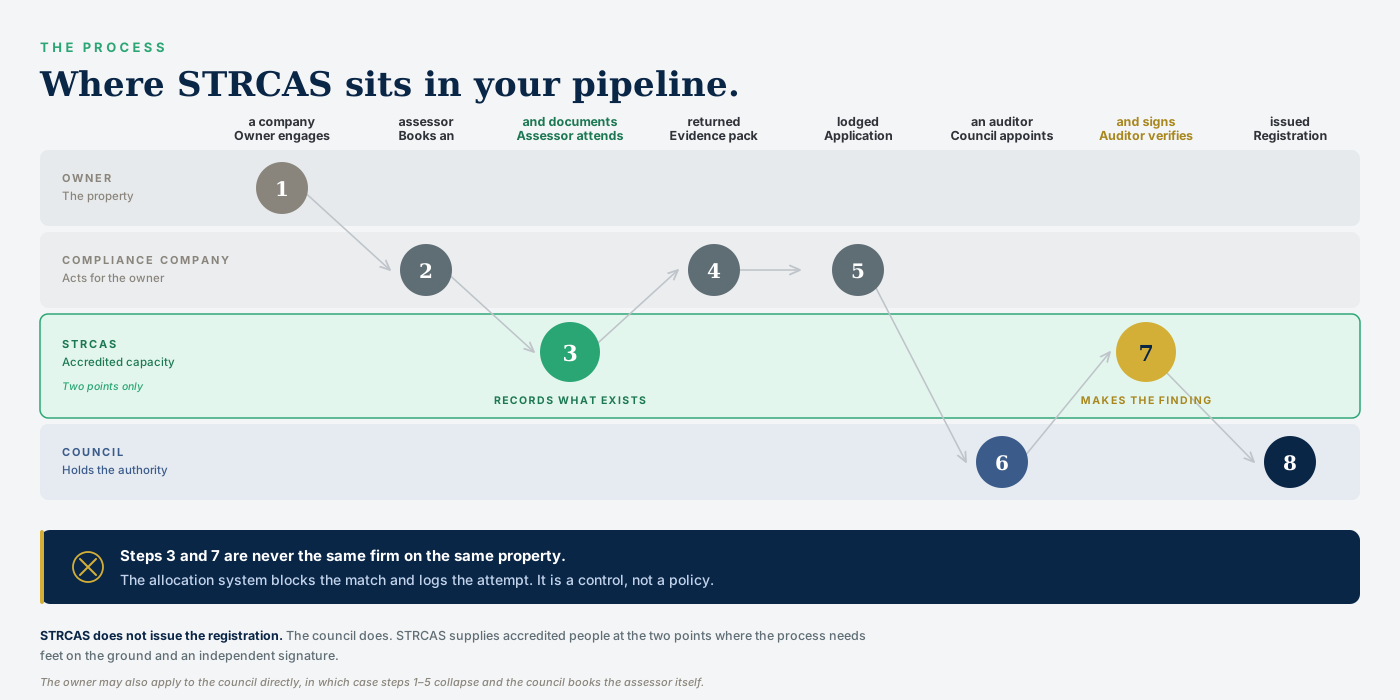
STRCAS is a field capacity layer. Not a consultancy, not a software product — accredited people who attend properties and record what exists, and independent professionals who verify those records against the standard. Councils accredit the network and pay per job rather than carrying permanent positions.
What STRCAS is not
- Not an advisor. We do not help owners become compliant. If we advised them, we could not credibly audit them.
- Not an issuing authority. STRCAS does not grant licences or issue registrations. Councils do that. We supply the capacity their process needs.
- Not consumer-facing. Property owners do not book here. Compliance companies, managing agents and councils do.
Independence
STRCAS does not advise property owners. It does not prepare or lodge applications, and it does not sell remediation. It assesses, and it audits.
That restriction is the product. An assessor who also sells the fix has an interest in what they find, and a signature from someone with an interest in the outcome is worth nothing to a council. So the separation has to be structural rather than a promise:
- An allocation rule enforced in software. No STRCAS auditor is ever allocated an application prepared by a STRCAS assessor. The system blocks the match and logs the attempt.
- Published terms for everyone. The same rate card, the same queue and the same assessors, whoever is booking and however much work they send. The fee varies with the property; it never varies with the customer.
- Open allocation logs. Any council that accredits the network can inspect the allocation record at any time.
The wall between advising and auditing is not a constraint on this business. It is the business. Everything STRCAS sells depends on a signature meaning something.
Nobody selects a practitioner by name. Allocation is assigned by the system on area, availability and standing. A party able to choose its own assessor could choose a lenient one, and the record would be worth nothing.
How quality is held
Accreditation is a point in time; standing is continuous. Every practitioner carries a live rating covering punctuality, completeness, conduct on site and turnaround — and those four are not the whole rubric, because audit outcomes, rejected evidence and disputed findings feed the same standing. Assessors are rated by the party that engaged them. Auditors are rated by the council that appointed them — never by the party whose property they assessed, because an auditor rated by the people they can fail is an auditor under pressure to pass.
Standing that slips follows a ladder rather than a switch, and the first rung is not a letter — allocation simply slows. Fewer jobs are offered, automatically, and the practitioner is told which dimension slipped and what to fix. Beyond that: suspension from allocation, mandatory re-training, and finally withdrawal of accreditation. Everybody re-accredits annually regardless of standing.
Where we are
STRCAS holds CIPC name reservation 9458352670 and is pre-incorporation. The assessor and auditor networks are being recruited and accredited now, ahead of registration frameworks coming into force — because a council that says yes needs capacity that already exists, not a promise to go and find some.
We would rather state that plainly than imply a scale we have not yet built.